

 Telegram
How to Play Indian Poker – Rules
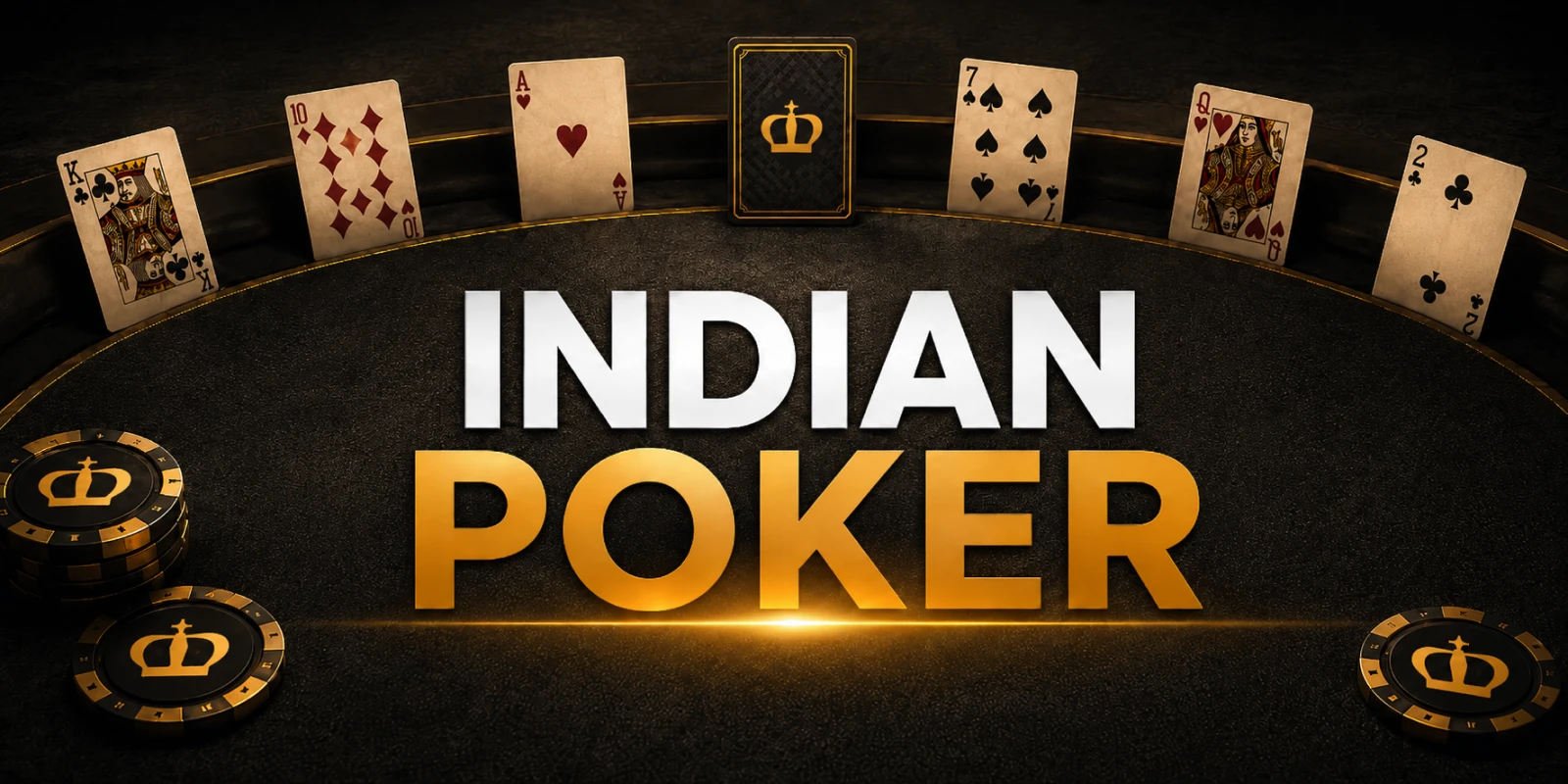
If you want to learn how to play Indian Poker and understand the rules quickly, this guide covers the full Indian poker game from the deal to the final reveal. Indian Poker is a simple social card game built around incomplete information. Each player receives one card from a standard deck of cards, then places it on their forehead without looking at it. Everyone else can see that card, but the owner cannot.
Because players must rely on opponents’ visible cards, betting behavior, and reactions, the game feels different from traditional poker. It is also unlike standard poker formats where players can study private cards or community cards directly. Even people who do not usually play poker can learn the rules fast and play the game after only a short explanation.
What Is Indian Poker?
Indian Poker is one of the easiest social poker formats to pick up. In standard Indian poker, each player gets one card, and that one card becomes the center of the hand. The unusual part is that the player places the card on their forehead without looking at its rank, while everyone else at the table can see it.
This one-card format is also known as Blind Man’s Bluff or Man’s Bluff in some groups. Indian Poker is a plain format, but that unique twist creates plenty of tension because players are betting without knowing their own card.
Classic Indian poker works especially well for home games because it is quick to explain, easy to reset, and enjoyable for both new and skilled players. Unlike standard poker, there are no multi-card hands to build and no long betting sequences to memorize.
Poker Sites Where Indian Poker Is Available
Most poker sites that offer standard cash games and tournaments do not list Indian Poker as a regular format. You may occasionally see it in private poker rooms, social apps, or informal online poker spaces, but it is much less common than other popular poker options. That is because Indian Poker works best as a face-to-face card game. The fun comes from reading expressions, noticing betting patterns, and reacting to the visible cards on other players’ foreheads. For that reason, it is usually better suited to a live group than to mainstream online poker rooms.
That being said, if you still want to experience Indian Poker online, here are some of the best sites to consider:




















How To Play Indian Poker Step By Step
Learning how to play Indian poker is straightforward once the flow of a round is clear. The game moves through a few clear stages, and each one affects how players read the table and make decisions. The next sections break that process down in order, so new players can see exactly how a typical game unfolds from the opening deal to the final reveal.
Setting the rules and dealing cards
To play Indian poker, the group should first agree on the basic setup. Decide whether everyone pays an ante, whether poker chips will be used, and what kind of betting structure will apply. Standard Indian poker usually works best with 3-8 players, although slightly smaller or larger groups can still play.
Once the rules are clear, the dealer shuffles the deck of cards and gives one card face-down to each player. Because the cards are dealt face-down, nobody should look at the rank. Instead, each player places the card on their forehead without seeing it, so the other players can view it clearly. Action usually starts with the player to the left of the dealer.
Betting rounds and player decisions
The betting round in Indian poker is uncomplicated. In many groups, there is only a single betting round, which keeps the pace quick and easy to follow. During this betting stage, players can check, bet, call, raise, or fold, depending on the agreed house rules.
Every decision is based on visible information. Players must rely on the visible cards of their opponents, along with hesitation, confidence, and other betting behavior. A table full of low visible cards may encourage a confident bet, while a player with what appears to be a strong card on their forehead may cause others to react more carefully. That betting dynamic is what makes the game interesting.
Some players prefer unique betting rules with a cap on raises. Others allow more freedom, enabling aggressive betting and more dramatic bluffs. Either way, the betting structure should be clear before the first hand begins.
Showdown
Once betting ends, the remaining players reveal their cards and compare ranks. The player with the highest card wins the pot. In standard Indian poker, the player with the highest ranking card wins because there are no pairs, straights, or flushes to consider.
If players have cards of equal rank, the group can split the pot or replay the hand according to the agreed tie rule. This final reveal is often the funniest moment of the round because a bold bluff or a strange read can suddenly make perfect sense.
Indian Poker Hands
Indian Poker does not use full hand combinations like pairs, straights, or flushes. In the standard version, each player has only one card, so hand strength comes down to simple card rank. That makes the game easy to follow for beginners, while still giving players enough information to bluff and read the table.
The usual Indian poker hand rankings are:
- Ace – usually the highest card
- King
- Queen
- Jack
- 10 down to 2
In standard Indian poker, the highest ranking card wins the round at showdown. If two players have the same rank, the group can split the pot or use a tie rule agreed on before the game starts.
Indian Poker Betting Rules
The betting structure in Indian Poker is clear, so the game stays fast and social. As a rule, players agree on the table rules before the first card is dealt.
Common Indian poker rules include:
- An ante from every player before the cards are dealt.
- One betting round in Indian poker after each player places one card on their forehead.
- Standard actions such as check, bet, call, raise, and fold.
- A fixed betting limit or a cap on raises during the betting stage.
- A clear tie rule, such as splitting the pot or replaying the hand.
Keeping the betting round and table rules clear from the start makes the game easier to follow and helps players focus on reads, bluffing, and betting behavior.
Indian Poker Variations and Their Rules
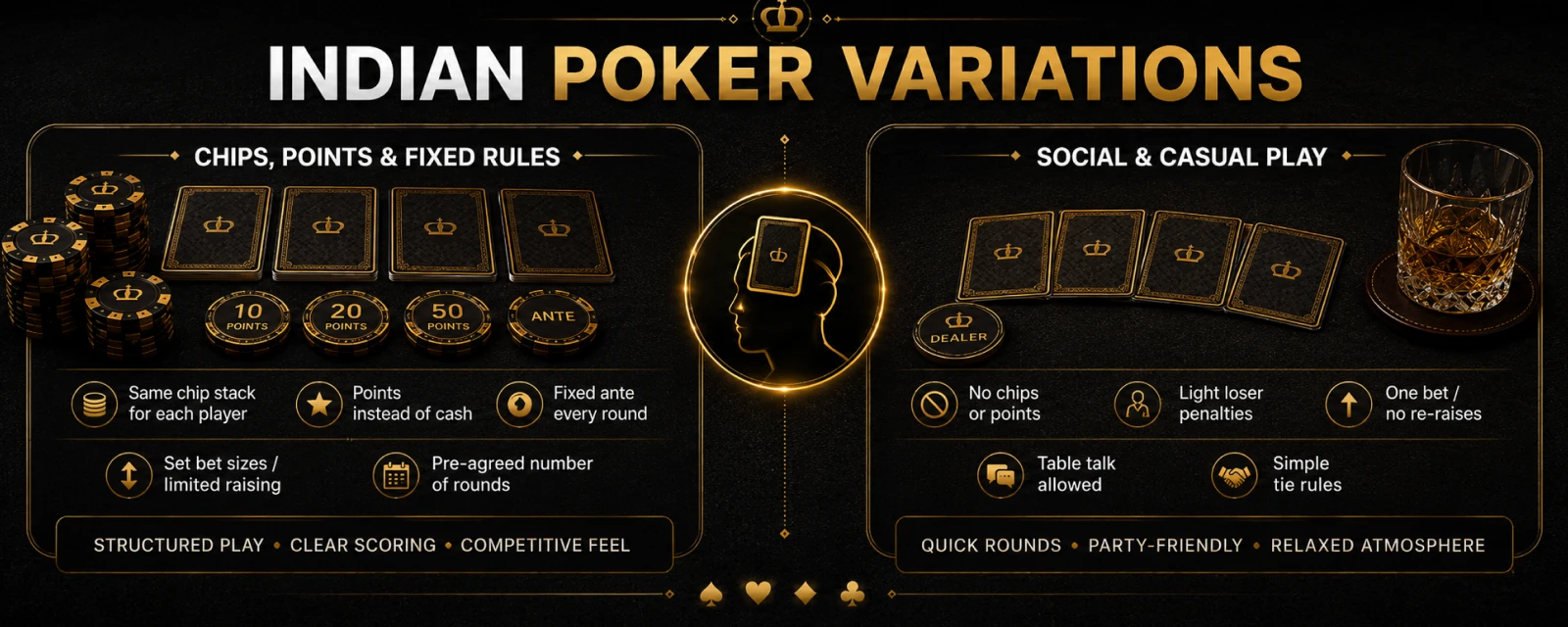
There are several versions of Indian poker, and those versions can feel quite different even when the core idea stays the same. Some players prefer a structured format with points or poker chips. Others keep it casual and change the rules from round to round.
Indian Poker with chips, points, or fixed betting rules
Many people prefer a more structured version of the Indian poker game, especially when they want to play several rounds and track results more clearly. In these versions of Indian poker, players often use chips or points to make the format feel more competitive.
Common setups include:
- Poker chips, with each player starting with the same stack.
- Points, where wins and losses are recorded without real money.
- A fixed ante before every round.
- Set bet sizes with limited raising during the betting round.
- A pre-agreed number of rounds to decide the overall winner.
These unique betting rules give classic Indian poker a more organized feel while keeping the one-card format and bluffing element intact.
Social and casual Indian Poker variations
A lot of casual groups play Indian Poker as a fun card game rather than a serious poker format. These versions usually keep the rules light and make it easy for new players to learn how to play Indian poker without much setup.
Common casual variations include:
- No chips or points, when players simply play the game for fun.
- Light penalties for the loser, such as becoming the next dealer.
- Fast rounds with only one bet or no re-raises.
- Table talk is allowed to provoke bluffs and reactions.
- Straightforward tie rules to keep the game moving.
These casual versions of Indian poker work well at parties and home games because they keep the pace quick and the atmosphere relaxed.
Indian Poker vs. Texas Hold’em: Key Differences
Indian Poker and Texas Hold’em may share poker roots, but they create very different experiences at the table. One is built for quick reads, simple setup, and social play, while the other rewards deeper strategy across several stages of a hand. For new players, the comparison matters because it shows why Indian Poker feels lighter and easier to start, even though the pressure can still be real.
The table below highlights the main differences in structure, pace, and decision-making:
| Feature | Indian Poker | Texas Hold’em |
|---|---|---|
| Cards per player | 1 hidden from the owner | 2 private hole cards |
| Community cards | None | 5 community cards |
| Hand strength | Single card rank | Full poker hand rankings |
| Betting flow | Usually one round | Multiple betting rounds |
| Main focus | Bluffing and reactions | Odds, position, and hand reading |
| Typical setting | Casual social play | Casual and competitive play |
Indian Poker FAQs
Why is Indian Poker also called Blind Man’s Bluff?
It gets that name because players cannot see their own card and must make decisions without knowing their exact rank. The entire game revolves around bluffing, reading reactions, and acting on incomplete information.
Do players know their own cards in Indian Poker?
No. Each player places the card on their forehead without looking at it. Everyone else can see the card, but the owner cannot.
How many players can join an Indian Poker game?
Indian Poker works best with three or more players. Small tables keep betting easy to follow, while larger ones add more visible information, more bluffing pressure, and a more unpredictable final reveal.
Is Indian Poker more about psychology or luck?
It uses both, but psychology usually has a bigger effect over time. The card still matters, yet reading reactions, judging confidence, and choosing the right moment to bet often decide the round.
Can Indian Poker be played with real money online?
Online poker versions exist in private settings, but mainstream poker sites usually do not feature it as a regular option. It is much more common in home games and informal poker rooms.
Is Indian Poker the same game as Texas Hold’em?
No. Texas Hold’em uses private cards, community cards, and full hand rankings across multiple betting rounds. Indian Poker uses one card per player and centers on bluffing, visible information, and quick decisions.
Thanks for your feedback!