


Best US Online Poker Sites for Real Money (2026)
The market for best online poker sites has shifted quickly in the last few years and US regulations continue to evolve, so it helps to look at brands through a wider safety and quality lens instead of focusing only on promotions.
In this guide, our team looks at the top poker sites for real money that actively cater to US traffic. Regulation around online poker in the US remains a patchwork. Only a handful of states run locally licensed rooms and the rest of the country relies on offshore operators that accept Americans while holding licenses in overseas jurisdictions. Our goal is to map that world of online poker in a practical way so you can see which sites fit your location, bankroll, and preferred formats without guesswork.












Reviews of Online Poker Sites for Real Money
Before you pick a table and play for real money, it helps to understand why certain brands keep showing up whenever people talk about the best poker sites for US players. From the broader field, we narrowed things down to three online poker sites that will suit those who want good game selection, strong crypto or fiat support, and modern software.
Between them, you get tournament series, cash games at many stakes, and loyalty systems that aim to keep the best poker rooms attractive over time instead of front-loading all value into a single sign up promotion. At the same time, we kept banking friction, verification processes, and practical table quality in mind so that each recommendation feels like one of the best online fits for US-oriented play rather than just looking good on paper.
Americas Cardroom (ACR) – real money poker site review
Americas Cardroom (ACR) is the flagship skin of the Winning Poker Network, an offshore online poker network that primarily targets US-facing traffic while also accepting international players. Because it shares a pooled player base across the network, ACR offers steady availability in standard cash games, sit and gos, and a regular multi-table tournament schedule.
New customers can claim a first deposit bonus that matches 100% of the initial deposit, with the bonus released through play under the site’s stated terms rather than being credited all at once. Beyond the welcome offer, ACR runs recurring promotions and loyalty incentives that are published directly on its official promotions and rewards pages.
Banking is a major focus at ACR, with strong support for cryptocurrency deposits and withdrawals alongside other available payment methods. From a practical standpoint, the room is built for players who want a traditional poker setup with straightforward navigation, multi-tabling support, and consistent access to tournaments and cash games without needing to rotate between multiple sites.
CoinPoker – real money online poker review
CoinPoker is a crypto native room built by and for poker players who are comfortable handling digital assets instead of fiat deposits. The brand positions itself as a global online poker platform with fast crypto withdrawals, USDT-based stacks, and support for several coins, including Ethereum, Litecoin, Dogecoin, Solana, Bitcoin Cash, and XRP. The room combines a 150% match up to 2,000 USDT with ongoing rakeback deals, creating a package that rewards both new deposits and regular play.
From a game selection standpoint, CoinPoker leans heavily into online poker tournaments and cash tables across No Limit Hold’em, Pot Limit Omaha, and 5 Card Omaha, along with recurring festival series such as Winter Festival and CSOP, weekly leaderboards, and freerolls for lower bankroll customers. The client is available on desktop and mobile, sitting comfortably alongside other online gaming and crypto casino apps in the same ecosystem, and the interface is tuned for multi-tabling with four color decks, hotkeys, and quick lobby filters.
CoinPoker works best if you want a single room where you can chase leaderboard races, grind mid-stakes cash on relatively anonymous tables, and handle all deposits and withdrawals through a dedicated crypto wallet. Its mix of instant withdrawals and clear rakeback percentages makes it easier to track how you win real money playing over time and how much of that comes back through rewards instead of one-time headline promos.
BetOnline Poker – review of a real money poker room
BetOnline Poker Room takes a more traditional route than the tokenized, “ownership-model” rooms, leaning instead on volume-driven scheduling and a promotions layer that’s built directly into the client. The headline for new accounts is a 100% Poker Welcome Bonus up to $1,000, paired with an 8-day run of free tournament tickets that’s positioned as a structured on-ramp into the MTT lobby rather than a one-and-done freebie. After that, the site keeps the grind incentive-heavy with ongoing poker promos like Play & Win Leaderboards (monthly rewards pool promoted as $150,000+), plus rotating events and leaderboard formats that you opt into inside the software.
At the tables, BetOnline focuses on the staples – Texas Hold’em and Omaha across cash games and tournaments – while also supporting faster, lobby-driven formats such as Sit & Go and Windfall tournaments, along with niche menu items like Pineapple and Open Face Chinese Poker listed in its official poker help sections. Access is built around a downloadable desktop client for Windows and Mac, with support pages and promotions referencing play across Windows, Mac, and HTML5, and mobile access handled through the platform’s mobile flow. If you’re the type who wants tools baked into the ecosystem, BetOnline also highlights a free poker odds calculator available in the Poker Room.
Because the room’s pitch is less about novelty and more about repeatable sessions, the “why play here” argument is mostly practical: familiar poker formats, frequent leaderboard-driven rewards, and a client that’s set up to track missions and contests while you play. The promotions menu reads like a steady rotation of reasons to log in – cash-game and tournament leaderboards, plus specialty promos such as a High Hand Weekly Leaderboard – which is exactly the kind of structure that tends to appeal to players who prefer consistent incentives over one-off splashy features.
Bonuses and Promotions at Real Money Poker Sites

Bonuses are one of the most visible differences between rooms, but they are also the most misunderstood. A poker bonus is not free cash; it is a structured reward that unlocks as you generate rake in tournaments and cash games, and it often works in combination with rakeback, leaderboard prizes, and freeroll entries. It is essential to read the fine print on release speed, expiry, and game restrictions rather than focusing only on the headline percentage.
On the sites covered here, you will see matched deposits for new accounts, cashback-style rakeback systems, and long-running series that effectively act as seasonal promotions. Across all of them, it is crucial to remember that bonus money is tied to play volume, so it should be seen as a way to cushion variance rather than a reason to push beyond a sensible bankroll plan.
No Deposit bonuses
True no-deposit offers, where you receive real funds or tickets before making any payment, are rare in the US-facing poker space in 2026. The current promotion pages at Americas Cardroom, CoinPoker, and BetOnline show deposit-based matches, rake races, tournament series, and rakeback systems, but none advertise a traditional no-deposit cash bonus that can be converted directly to withdrawals.
That lines up with a broader trend across real money sites that prefer to reward consistent volume rather than give completely free starting bankrolls. In general, a no deposit package in poker means a small amount of playable funds or restricted tickets that must be wagered several times before withdrawal, usually with tight time limits. If such an offer appears at any of the reviewed rooms in the future, it should be evaluated with the same caution as any other promotional tool, keeping in mind that early winnings can still disappear quickly if you chase high-variance formats.
Sign-Up bonuses
Welcome bonuses are central to poker marketing, and almost every major room runs some form of matched deposit for first-time customers. At the brands we cover here, you will find 100 percent or 150 percent matches that release in chunks as you generate rake across cash games and tournaments.
In practical terms, these deals work best if you are planning to play steadily over several weeks. The key details to focus on are the rate at which your bonus balance converts to cash, the expiry window, and whether specific formats are excluded. Compared to classic casino packages, poker sign-up deals tend to be more transparent since you can track unlock progress directly alongside your rake, yet it still takes discipline to avoid viewing the promotion as guaranteed profit. It is more accurate to frame these incentives as structured poker offers that marginally improve your long-term return if you were going to play anyway.
Reload bonuses
Once you are past the first deposit phase, regulars care far more about ongoing value than about one-off promotions. On offshore rooms and crypto platforms alike, poker sites offer reload matches, leaderboard prizes, milestone bonuses, and seasonal festival promotions to keep long-term customers engaged. Americas Cardroom, for instance, emphasizes recurring reload bonuses and regular tournament-driven promotions rather than fixed weekly rake races, while CoinPoker leans into recurring series such as CoinRaces, festival events, and cash-game leaderboards with fixed prize pools.
In addition to these recurring deals, many sites will offer occasional short-term boosts tied to big events such as Venom tournaments or major series finals, often in the form of satellite ladders, ticket bundles, or extra rakeback for specific stakes. The real value lies in choosing a room whose long-term promotions match your volume and preferred formats rather than chasing every headline banner across multiple brands. Reload incentives should be treated as a bonus on top of solid game selection and safe banking, not as the main reason to deposit.
Popular Real Money Poker Games

Real stakes poker revolves around a relatively small set of core formats and betting structures. New players sometimes imagine that every online poker game is wildly different, but in practice, most US-facing rooms build their lobbies around four pillars: Texas Hold’em, Pot Limit Omaha, Omaha Hi-Lo, and Seven Card Stud.
Across many online poker rooms, you will find cash, sit and go, and tournament versions of these staples offered across a mix of micro, low, and mid stakes. That balance of formats lets you ease into real money games at small blinds before ramping up, while also supporting long-term development if you later decide to branch out from a single variant.
Texas hold’em for real money
No Limit Texas Hold’em is still the default choice on almost every platform. It dominates cash tables, tournaments, and fast-fold games and remains the first stop for most new customers learning to play poker online. The basic structure is familiar: two hole cards, five community cards, four betting streets, and flexible bet sizing that supports deep stack strategy.
Across most online poker sites, Hold’em cash games run around the clock at a wide spread of stakes, from small blind tables suitable for tight bankrolls up through mid stakes where regulars trade lines and exploitative adjustments. Tournament schedules are also heavily Hold’em-oriented, with freezeouts, re-entry events, and progressive knockout structures.
Omaha poker for real money
Pot Limit Omaha offers a style of play where strong drawing hands appear much more often, built around four hole cards and pot-capped bet sizes. Variance is higher than in Hold’em because hand equities run closer together and big draws often go in by the turn, which makes it popular with action-oriented regulars who do not mind swings.
PLO cash games are commonly available across multiple stake levels, and in some cases appear in tournament schedules or as part of mixed-game rotations. Its faster equity shifts and larger average pots make it a natural alternative for players looking to move beyond two-card formats.
Omaha Hi-Lo for real money
Omaha Hi-Lo, sometimes written as Omaha Eight or Better, splits the pot between the best high hand and the qualifying low hand. This format can be more complex to learn but rewards tight starting hand selection and positional awareness. For players who enjoy deeper strategy and a slightly slower pace compared to pure PLO, Hi-Lo adds an extra layer of decision-making.
Not every poker lobby gives Hi-Lo the same level of exposure, but it is typically available through dedicated PLO8 tables or as part of mixed-game rotations. It becomes a natural option once you are comfortable with standard Omaha mechanics and want a format where understanding hand-ranking nuances alone can create a meaningful edge.
Seven card stud for real money
Seven Card Stud, while far less visible than Hold’em and Omaha, still appears in modern poker clients through smaller cash pools and mixed-game offerings. Players receive a combination of face-up and face-down cards across multiple streets, with fixed-limit betting structures more common than no-limit formats.
Stud continues to appeal to players who enjoy tracking exposed information and planning hands street by street. For those familiar with older cardroom games or looking to break away from flop-based formats, it provides variety without relying on community cards.
Top Real Money Poker Apps for 2026
Modern real stakes play is no longer locked to a desktop. Mobile poker apps now compete directly with desktop clients in terms of traffic and game selection, so it makes sense to judge them by the same standards as full software.
For US customers, the ideal mobile setup combines a stable client, easy biometric login, smooth table animations, and full cashier access so you can manage bankroll and table selection from the same online poker platform while commuting or relaxing at home. These clients sit alongside other online gaming apps, yet still need to treat security, encryption, and geolocation with more care because they handle funds rather than just entertainment content.
| Poker app | Platforms supported | Mobile strengths | Best suited for |
|---|---|---|---|
| Americas Cardroom mobile | Apps for Android and iOS, plus mobile-accessible poker client | Full access to cash games and tournaments, stable mobile performance, integrated cashier with strong crypto support | US-facing players who want consistent tournament access and standard cash games on mobile |
| CoinPoker mobile | Apps for iOS and Android, plus play in mobile browsers | Crypto wallet integration, fast hand animations, easy access to festival schedules, and leaderboards | Crypto-focused players who travel or prefer short bursts of play |
| BetOnline Poker mobile | Mobile-accessible poker client with Android support and mobile web access | Simple lobby navigation, access to tournaments and SNGs, built-in odds calculator available in the poker room | Players who prioritize promotions, leaderboards, and casual-to-regular mobile sessions |
Start Playing Online Poker for Real Money
If you are completely new to real stakes play, the process can feel more complicated than it actually is. In practice, you move through a set of clear stages that are similar across rooms, whether you are on offshore crypto brands or state-regulated clients. The goal is to play online poker for money in a controlled way instead of rushing through registration and depositing out of impatience.
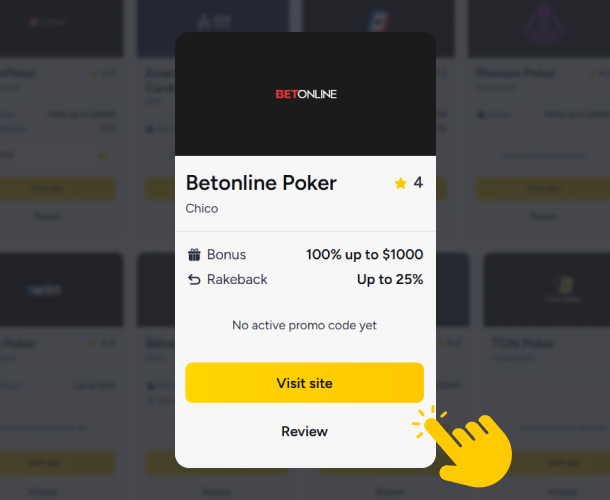
check whether you are in a regulated state or using an offshore site. Review traffic levels, available games, and support options. This is the point where you decide which room you want to play online for real money, taking into account device support and payment methods.
sign up with accurate personal details, using an email address and a secure password. Basic identification information will be required to withdraw funds.
enable two-factor authentication if available, set strong security questions, and avoid reusing passwords from other services.

state-regulated rooms enforce geolocation and will not allow you to sit at tables unless your device is physically within approved borders. Offshore rooms focus more on KYC at cashout.

choose a banking method that matches your comfort level and fees. Crypto deposits settle quickly, while cards and bank transfers may take longer or incur extra costs. Keep the first deposit small and sized to fit your budget.
if you are comfortable with the terms, register for sign-up bonuses or rakeback deals before you start playing.

open a single table at the lowest stakes available, ideally a limit where losing a full buy-in does not hurt your overall budget. Focus on learning the software and table flow before adding more tables or moving up.
use built-in hand histories or external tracking tools to review key hands, monitor variance, and keep an eye on how your bankroll behaves over time while playing poker with real money.

Popular Payment Methods at Real Money Poker Sites
Banking can make or break any room. It does not matter how soft the games are if you cannot move funds in and out efficiently. The brands covered here lean heavily on crypto, yet many US-facing offshore rooms and all state-regulated operators also support more traditional methods such as debit cards, credit cards, and bank transfers.
Offshore rooms prioritize speed and anonymity over deep integration with banking apps, while state-licensed clients trade a slower verification process for tighter regulation and explicit state backing. It is important to decide early whether you want to operate mostly in crypto or in local currency so that you can pick payment methods that support that choice.
Depositing money
Getting funds onto a client is easier than taking them off, which is why you should pay even more attention to withdrawal pages than deposit sections. Common deposit approaches include:
- Debit and credit cards linked to US banks are subject to issuer policies on online gambling transactions.
- Bank wires or ACH-style transfers for higher volume customers who do not mind slower processing and more formal verification.
- Crypto coins such as Bitcoin, Ethereum, Litecoin, or USDT, especially on CoinPoker and Phenom, where the cashier is designed around digital wallets.
- Prepaid cards or voucher systems, which can help keep poker spending separate from day-to-day accounts.
Regardless of method, it is wise to start with small test deposits and confirm that both incoming and outgoing transactions work as expected before committing to larger amounts.
Withdrawing winnings
Cashouts are where you discover how a room really treats customers. Key points when withdrawing include:
- Using the same method for cashout that you used for deposit, where possible, especially on regulated rooms that favor closed-loop policies.
- Understanding minimum and maximum withdrawal limits so you are not forced into awkward partial payouts when your bankroll grows.
- Confirming any internal review times so that you have realistic expectations about when you will actually see your winnings in your own accounts.
Handled correctly, banking becomes just another background task rather than a source of stress. If a client repeatedly creates friction at the withdrawal stage, it is better to move on than to fight through every cashout.
Our Review Process – Forming the Top Real Money Poker Site Rankings

Our team does not rely on a single metric when comparing rooms. We use a structured internal framework that looks at licensing, reputation, software, game selection, bonuses, level of competition, rake structure, payment options, and traffic before recommending any site.
By combining our own testing with detailed traffic checks and long-term observations, we rank candidates not just by promotional headlines but by overall value over time. This approach helps us highlight top real money online poker sites that work well month after month instead of only during a single festival or bonus window.
Poker software and user experience
Platforms that crash, lag, or make it hard to multi-table are non-starters. We install each room on multiple devices, test the lobby structure, and measure how easy it is to find tables, manage bet sizing, and review hand histories. In our view, intuitive interfaces, useful customization options such as preferred bet sliders, and solid mobile support are all essential parts of a strong poker experience rather than extras bolted on at the end.
Player activity
Traffic levels determine whether you can actually find games at your preferred stakes and times. We monitor real-time and historical activity in each lobby to see how busy rooms are by region and format, as well as which brands are trending up or down. We look at peak cash numbers, tournament entries, and sit and gos fill times to judge whether you can simply sit down and play or whether you will constantly struggle to find open seats at the poker tables you care about.
Level of competition at the tables
Not all sites cater to the same audience. Some skew towards grinders using HUDs and advanced tools, while others appeal more to recreational customers. We keep notes on average tendencies at each stake level, how many short stacks appear, and how often we see familiar screen names in the same pools. This helps us understand which rooms feel accessible for newer customers and which are better suited to more seasoned poker players.
Rake structure
Rake and fees are effectively the price you pay to play. We compare cash game caps, tournament fees, and jackpot contributions across rooms to see how much poker sites make from each pot or entry and how that compares to common industry ranges. Experience shows that even small differences can compound significantly over long sample sizes, so we treat rake structure as a core part of any review rather than a minor detail.
Poker game variants
Breadth of formats matters because it determines how far you can grow without leaving a room. We log which variants and stakes are available, how active each lobby is, and how many niche options appear, such as mixed games or fast fold formats. That helps identify poker sites that go beyond basic Hold’em and Omaha and platforms that stick rigidly to a narrower template.
Licensing, regulation, and security
Where a room is licensed and how it handles security is critical. State-regulated rooms in Nevada, New Jersey, Pennsylvania, Michigan, Delaware, West Virginia, Connecticut, and Rhode Island operate under local gaming authorities, while offshore brands hold licences in jurisdictions such as Malta, Curaçao, or Kahnawake. We check whether each operator has a clear license to offer real money games, how they audit RNGs, what anti-bot and anti-collusion tools they describe, and how they handle complaints and dispute resolution.
Deposit and withdrawal options
Finally, we test the cashier in each room. That includes confirming available methods, sending small test deposits, making withdrawals, and tracking how long funds take to arrive. We also note any fees, limits, or extra verification layers that appear during cashout. This is where practical differences between crypto-heavy offshore rooms and domestic regulated clients become obvious and where we decide whether a brand is truly one of the best online choices for our readers.
Is Online Poker for Real Money Legal in the USA?
The legal picture for real stakes poker in America is complicated but navigable. Some states have fully regulated online poker markets, while others do not license operators but also do not explicitly criminalize individual play on offshore rooms. Understanding the legal status of online poker in your state is essential before you deposit anywhere. A simple way to visualise the situation is to think in three broad categories.
| Category | Examples of states | Where you can play |
|---|---|---|
| Fully regulated online poker | Nevada, New Jersey, Pennsylvania, Michigan, Delaware, West Virginia, Connecticut, Rhode Island | State-licensed rooms with geolocation checks while you are physically inside state borders |
| No state licensing but no explicit player ban | California, Texas, Florida, New York, Illinois, Ohio, Georgia, North Carolina, and others | Offshore sites that accept US customers and are licensed overseas, operating in a legal grey area |
| Explicitly restrictive or very strict laws | Washington, Utah, Hawaii | Caution advised; local rules are tighter, and you should check state law or seek legal advice before depositing |
The table above is a simplified snapshot, not legal advice, and gambling laws can change quickly. Because of that, any offshore room should be viewed as part of a broader risk calculation, and players should always check the current rules for their own state, or seek local legal guidance, instead of assuming that regulation works the same as at home.
Real Money Poker – What Are the Risks
Poker is a game of skill combined with chance, and real money adds another layer of risk. Many players enjoy the challenge and treat the game as a serious hobby, but the same elements that make it exciting can also lead to problems if boundaries are not respected.
Financial risks
The most obvious danger is losing money faster than you expect. Variance in card games means that even strong players can go through long losing stretches, and the ease of instant deposits makes it tempting to chase. When you are playing poker with real money, a bad night can impact savings if you do not hard cap how much you bring to the client.
Good practice includes setting monthly and session limits, separating poker funds from essential bills, and accepting that bankrolls can and will swing. Never deposit money you cannot comfortably lose, and treat any winnings as a bonus rather than income you rely on.
Gambling Addiction
For a minority of people, online play can tip from a casual hobby into compulsive behaviour. Warning signs include hiding activity from friends or family, repeatedly chasing losses, thinking constantly about games even when away from screens, or ignoring other responsibilities.
Most reputable rooms provide limit tools, time-out features, and links to support organizations. If you recognise early signs of problem gambling in yourself, reach out to professional help in your area and use every available tool to slow or stop play. Poker should never come at the cost of mental health, relationships, or long-term stability.
Security risks – fraud and data protection
Wherever money and personal data are involved, malicious actors follow. Risks range from phishing emails that imitate poker sites to compromised Wi-Fi networks and malware that targets your device. In poorly regulated rooms, there is also the threat of collusion, bots, and real-time assistance tools that create unfair games.
Mitigating these threats means sticking to platforms that invest in anti-cheat measures, encryption, and independent audits; using strong, unique passwords and two-factor authentication; and avoiding shared devices or unsecured networks when logging in. The better rooms, including the ones covered in this guide, publicly outline their anti-bot, anti-RTA, and anti-collusion tools, which is an important trust signal.
Legal Risks – Playing in restricted jurisdictions
Finally, there is a legal risk if you play from a state that actively restricts online gambling or if you use methods that try to disguise your location on regulated rooms. While current federal law focuses on operators rather than individuals, states can still enforce their own rules, and payment processors may block or reverse transactions.
Before depositing anywhere, check local laws and, where necessary, seek advice from a qualified professional rather than assuming that what works for a friend in another state will also be safe for you. Respecting geolocation rules and avoiding clearly prohibited behaviour is part of treating real stakes poker responsibly.
Comparing Free Poker Sites and Real Money Rooms
Free play and real stakes share the same basic rules, yet they feel very different in practice. Cash games, tournaments, and freerolls all use the same hand rankings and betting structures, but they attract different behaviour because only some formats involve monetary consequences. Understanding how fun-focused play on poker sites online differs from real stakes tables helps you choose the right environment for your goals.
In broad terms, free rooms and play money apps are best for learning rules, testing basic strategy, and killing time without risk. Real stakes platforms are better for serious study and long-term improvement because opponents care more about decisions when actual funds are at stake. The table below summarises the main contrasts.
| Aspect | Play money sites and apps | Real money poker rooms |
|---|---|---|
| Stakes | No real money at risk | Buy-ins sized in dollars or crypto with balances you can withdraw |
| Skill level | Very wide mix, many people trying random plays with no consequences | More structured play, opponents take decisions seriously because money is at stake |
| Seat availability | Almost always instant seating | Depends on traffic and format, peak hours are best |
| Rewards | Extra play money chips, avatars, badges, progress bars with no cash value | Real cash payouts, tournament tickets, loyalty rewards that can lead to real value |
| Regulation | Treated as games or social apps with little or no gambling oversight | Subject to gambling laws, licensing, compliance, and tax obligations |
| Best suited for | Learning rules and testing formats with zero financial risk | Long term growth, disciplined bankrolls, and realistic decision-making |
Seen this way, free rooms act as a sandbox within the broader online poker world, while real stakes clients represent the core of serious play. It can make sense to mix both, using play money spaces to experiment with unusual lines and regulated or offshore cash tables to test refined strategies under pressure.
FAQs About Playing Poker for Real Money
Is it legal to play real money poker online in the US?
Yes, but it depends on your state. In regulated states like New Jersey or Nevada, you can use licensed sites, including platforms tied to the World Series of Poker, while many other states are served only by offshore rooms in a grey area. Always check local rules before you deposit.
What payment methods are accepted at real money poker sites?
Most rooms support some combination of debit and credit cards, bank transfers, and, increasingly, crypto coins like Bitcoin or USDT. Offshore rooms lean heavily on digital assets, while regulated clients favor cards and direct bank methods.
How do I withdraw my winnings from a poker app?
You cash out using the same method you used to deposit. In most rooms, you submit a withdrawal request in the cashier, wait through internal review, and then receive funds back to your card, bank, or wallet. Plan for processing times of hours to a few days, depending on the method.
Are real money poker apps safe and secure?
Safety varies by operator. Licensed state rooms and well-known offshore brands publish details on encryption, anti-cheat measures, and independent audits, which helps build trust. New or unknown brands that hide their licensing details or avoid talking about security should be treated with caution if you want to win real money playing online without unnecessary risk.
Can I play poker for real money on my mobile device?
Yes. All of the rooms covered in this guide support mobile play through native apps or responsive clients, and most state-regulated rooms do the same.
What’s the minimum deposit to start playing real money poker?
Minimum deposits vary by room and method. On many mainstream brands, common minimums fall in the 10 to 25 dollar range, while some crypto platforms accept smaller amounts per transaction.
How can I avoid scams or fake poker apps?
Stick to brands vetted by independent reviewers, confirm licensing on official regulator pages where applicable, and only download apps from official websites or app stores. Be wary of unsolicited links or downloads, and avoid sending funds to personal wallets or accounts that are not clearly tied to the operator.
What are the risks of playing poker for real money?
The main risks are losing money, developing unhealthy habits, encountering unfair games on poorly regulated sites, and unintentionally breaching local rules. Balancing those risks requires strong bankroll management, honest self-assessment, and choosing rooms with solid reputations and clear oversight.